

Ever typed a word and felt it looked wrong? If you’ve wondered about useing or using, you’re in good company. The correct spelling is using. You drop the silent e from “use” before adding -ing. So use plus ing gives you using, and useing is just a common typo.
This simple guide explains the silent e rule in plain words. You’ll see examples of using, learn why useing is an incorrect spelling, and check how British English spelling and American English spelling compare. You’ll also get a quick memory trick so you never make this spelling mistake again. Whether you write emails, school papers, or social posts, writing accuracy matters.
Useing vs Using – Quick Answer
When people ask useing or using, the answer is always using. Useing is an incorrect spelling and a common typo. You won’t find it in any trusted dictionary spelling list.
The word comes from “use.” To add -ing, you drop the silent e first. So use plus ing becomes using.
Using – The Correct Spelling
Using is the present participle of the verb “use.” It shows an action that’s happening now or keeps happening. Think of “She is using a pencil.”
The useing or using question has one answer in every country. American English spelling, British English spelling, Australian English spelling, and Canadian English spelling all agree here. Nobody argues about this one.
Why Is “Useing” Incorrect?
Useing breaks a basic spelling rule. The “e” at the end of “use” doesn’t make a sound. So it has to leave before -ing shows up.
Your eyes often want to keep every letter. That’s natural, but it leads to a spelling error. When you doubt useing or using, remember that English drops that silent e on purpose.
The Silent-E Rule Explained
Many verbs end in a quiet “e.” The silent e rule says you remove it before adding -ing. This keeps the word short and easy to say.
Let’s see how it works. Take “use.” Drop the silent e and you get “us.” Add -ing and you get using.
The “e” in “use” still does a job, though. It makes the “u” say “yoo” instead of “uh.” The -ing ending takes over that job, so the e can go.
Read More: Workday vs Work Day: Which One Is Correct?
Using in a Sentence: Examples
Seeing a word in action helps it stick. Here are some spelling examples you can read out loud:
- I’m using my phone to take notes.
- She is using a new recipe tonight.
- By using a timer, you’ll finish faster.
- Using plain words makes your writing clear.
Notice the pattern? Each one has using spelled the same way. That’s the correct form every time.
These also work as grammar examples. In the second line, “using” sits inside a continuous tense. In the fourth, it starts the sentence and acts like a noun.
Common Mistakes with Useing and Using

Most people don’t misspell words on purpose. Speed is usually the culprit. Here are the common spelling mistakes you’ll see around this word:
- Typing useing when you type fast.
- Writing “useage” instead of “usage.”
- Mixing up “use” (the verb) and “use” (the noun).
- Trusting a spell-checker to fix everything.
Does any of this sound like you? Don’t worry. Plenty of confident writers get stuck on useing or using at some point.
The wrong form also pops up in captions and comments. Quick posts leave little time to check. A slow second look fixes most of these.
British English vs American English

Here’s some good news. The useing or using choice doesn’t change between British English spelling and American English spelling. The same goes for Australian English spelling and Canadian English spelling.
Other words do shift, though. “Ageing” is common in British writing, while Americans write “aging.” That’s a real spelling variation, and “using” isn’t part of it.
Using in Everyday and Formal Writing
In informal writing, people text fast and skip checks. That’s where useing often sneaks in. A friend might forgive it, but it’s still wrong.
Formal writing needs more care. Reports, school papers, and job emails should be clean. Getting useing or using right shows readers you care about writing accuracy.
Think of it like a stain on a white shirt. It’s small, but everyone notices it. Good professional writing builds trust.
The Origin and History of Using
The word “use” came into English from Old French. That word traces back to Latin roots. English later added the -ing ending to turn it into an action word.
Spelling in English changed slowly over many years. Writers kept letters that once had sounds. Over time, rules like the silent e rule helped tidy things up.
How to Remember the Correct Spelling
Memory tricks work best when they’re simple. Try this drop-e mantra: “Use loses its e.” Say it a few times and it sticks.
Here’s another idea. Picture the “e” as a tired traveler getting off a bus before -ing arrives. It steps out, and the word moves on. Silly? Yes. Helpful? Also yes.
You can also test it by comparing words. You’d write “making,” not “makeing.” You’d write “coming,” not “comeing.” Once you see the pattern, useing or using stops being a puzzle.
Useing vs Using – Common Usage Differences

Here’s the honest truth. Useing has no usage at all in standard English. It isn’t a rare option or a regional choice. It’s simply a common typo.
Using shows up everywhere. You’ll see it in novels, news stories, and manuals. It’s also a staple of professional writing and published writing.
Useing vs Using – Comparison Table
This quick table sums up the useing or using question. Scan it before you hit publish.
| Feature | Useing | Using |
| Spelling status | Incorrect | Correct |
| Follows silent e rule | No | Yes |
| Found in dictionaries | No | Yes |
| Accepted in formal writing | No | Yes |
| Used in all English varieties | No | Yes |
| Base verb | use | use |
| Pattern | use + ing (e kept) | use → using (e dropped) |
Is “Useing” Ever Acceptable?
In normal writing, the answer is no. Teachers, editors, and dictionary-approved spelling guides all mark it wrong. It doesn’t matter if the meaning is clear.
There’s one tiny exception. A brand name or username might use odd spelling on purpose. That’s a creative choice, not an answer to useing or using in real grammar.
Using – Grammar and Part of Speech
Using is a verb form. More exactly, it’s the present participle of “use.” It helps build verb conjugation patterns like “am using,” “was using,” and “will be using.”
It also works as a participial modifier. For example: “Using a map, we found the trail.” Here, “using a map” describes who did the finding.
You’ll also see it in a prepositional phrase such as “by using.” For example: “You can save time by using shortcuts.” This is great English grammar to know.
Using vs Other Silent-E Verbs
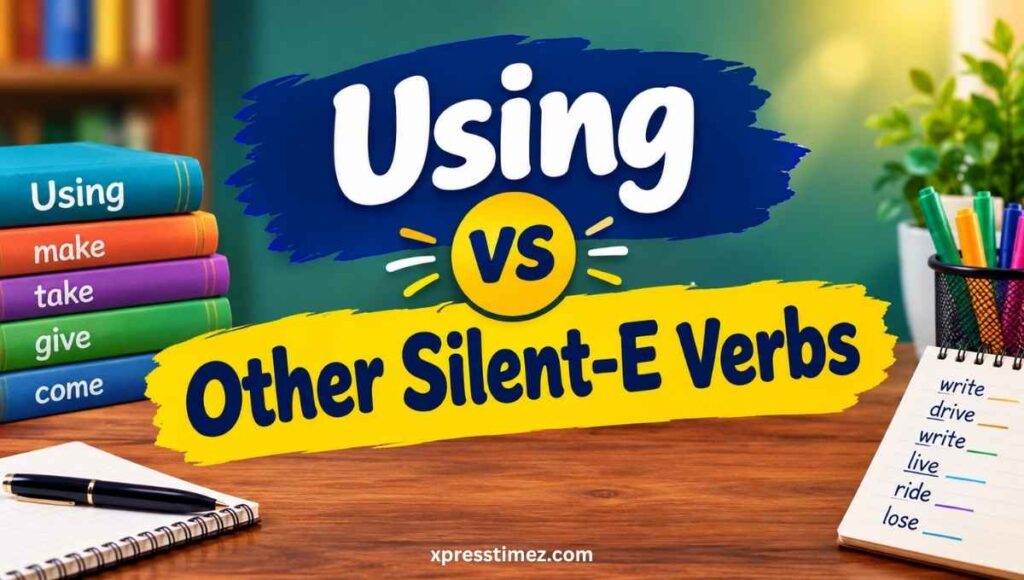
Many verbs behave like “use.” They end in a quiet “e,” and they all follow the same grammar rule. Check these out:
- make becomes making
- write becomes writing
- hope becomes hoping
- bake becomes baking
- love becomes loving
A few words are tricky, though. Verbs ending in “ee,” “oe,” or “ye” often keep the e. Think of “seeing,” “canoeing,” and “dyeing.”
Why does that happen? Dropping the e would blur the word. “Dying” and “dyeing” mean very different things. So the spelling keeps them apart.
Why Writers Slip Up on This Word
Typing speed plays a big part. Your fingers often run ahead of your brain. Then you hit send before a proofread.
Another cause is how the word looks. “Use” is short, so adding -ing feels like stacking letters. Your eyes accept “useing” because it seems tidy.
Quick Spelling Check Before You Publish
A short routine saves you from silly errors. Read your draft out loud once. Then scan for every word ending in -ing.
Next, check verbs that end in a silent e. Ask yourself, “Did I drop the e?” That one habit settles useing or using in seconds and catches most spelling mistakes of this kind.
Frequently Asked Questions
Is “useing” ever correct in English?
No. It breaks the silent e rule, so standard English treats it as a spelling error. Only a deliberate brand style would use it.
What part of speech is “using”?
Using is a verb form. It’s the present participle of “use.” It can also act like an adjective or a noun in certain sentences.
Is “by using” grammatically correct?
Yes, it is. “By” is a preposition, and “using” follows it as part of a prepositional phrase. For example: “She improved her writing by using a checklist.”
Why does the e disappear in using?
The “e” in “use” is silent. English drops it before -ing so the word stays clean. That’s the heart of the drop the silent e rule.
How is “using” pronounced?
The pronunciation of using is “YOO-zing.” The first part rhymes with “zoo.” The ending sounds like “ing” in “sing.”
What other words follow the silent-e rule?
Lots of them do. Words like “make,” “write,” “hope,” and “bake” become “making,” “writing,” “hoping,” and “baking.” These are all words that drop silent e.
Does autocorrect catch “useing”?
Often it does. Most spell-checkers underline it in red or fix it as you type. Still, autocorrect isn’t perfect, so a quick proofread helps.
Does spelling matter in casual writing?
It matters less, but it still counts. In texts and social media, small slips are forgiven. In emails and school work, clean spelling shows care.
Conclusion
The answer to useing or using is simple. Using is right, and useing is wrong. Remember the silent e rule, and you’re set.
Next time you type “use,” pause before adding -ing. Say the drop-e mantra in your head. You’ll get it right every time.

Wang Fang is an experienced grammar and language writer who enjoys making English easier to understand. With a passion for clear writing and practical language tips, Wang creates helpful content on grammar, vocabulary, word usage, spelling, and everyday English.
